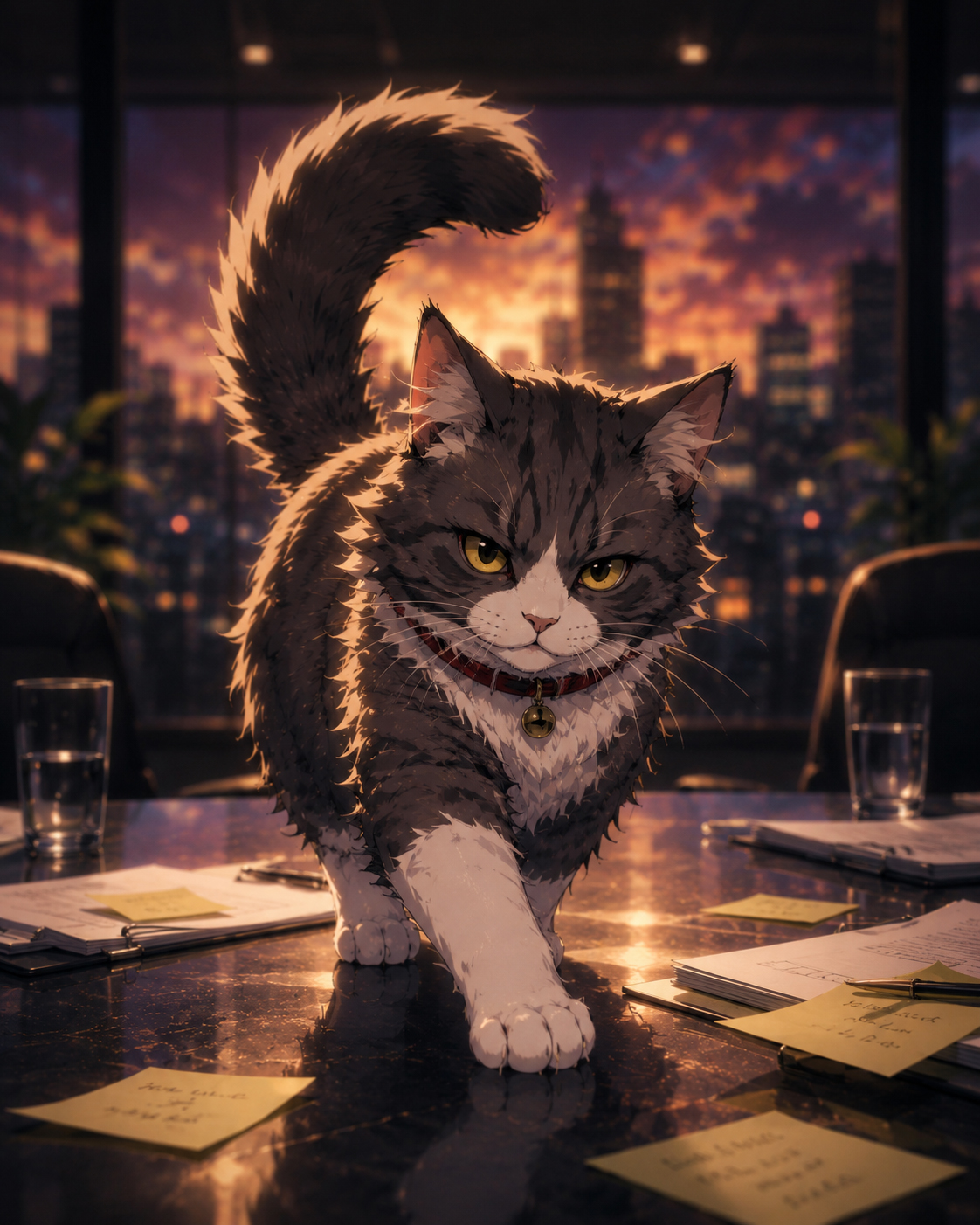
Character notes
Who is Conflict Cat?
Conflict Cat is the HR Daily character who turns suppressed workplace friction into visible comedy. He does not create the argument. The argument was already there, hiding under “just circling back” and “per my last email.”
He is funny because he behaves like a cat. He is useful because conflict often needs structure, not pretending.
What Conflict Cat believes
Conflict Cat believes that tense conversations need ground rules, listening, documentation, and a practical next step. He does not believe in endless meetings where everyone repeats their position and nobody names the problem.
He also believes that a workplace issue should be handled early, before it turns into a rumor system with snacks.
His role in the story world
Conflict Cat enters when coworkers are talking past each other, managers are avoiding a hard conversation, or the meeting agenda says “alignment” but the room says “volcano.” Hana Resources uses the moment to slow the conversation down and put structure around it.
He is especially useful for mediation scenes, meeting etiquette, communication breakdowns, unclear expectations, personality friction, and the dramatic difference between a complaint and a documented concern.
Typical Conflict Cat discoveries
- The problem is not the calendar invite, it is the unresolved expectation behind it.
- The meeting has an agenda, but no ground rules.
- Everyone says they are “fine,” while the sticky notes are clearly not fine.
- The loudest person is not always the issue, and the quietest person may have the missing fact.
- The conflict needs a next step, not a longer meeting.
Best Conflict Cat pages
- Workplace Conflict
- Office Etiquette
- Episode 4: Conflict Cat Enters the Meeting Room
- Performance Reviews
Design notes
Conflict Cat should look fluffy, dramatic, stubborn, and strangely wise. His visual world includes glass conference rooms, sticky notes, water glasses, mediation papers, tense faces, sliding folders, and the unmistakable feeling that the cat knows what everyone is avoiding.